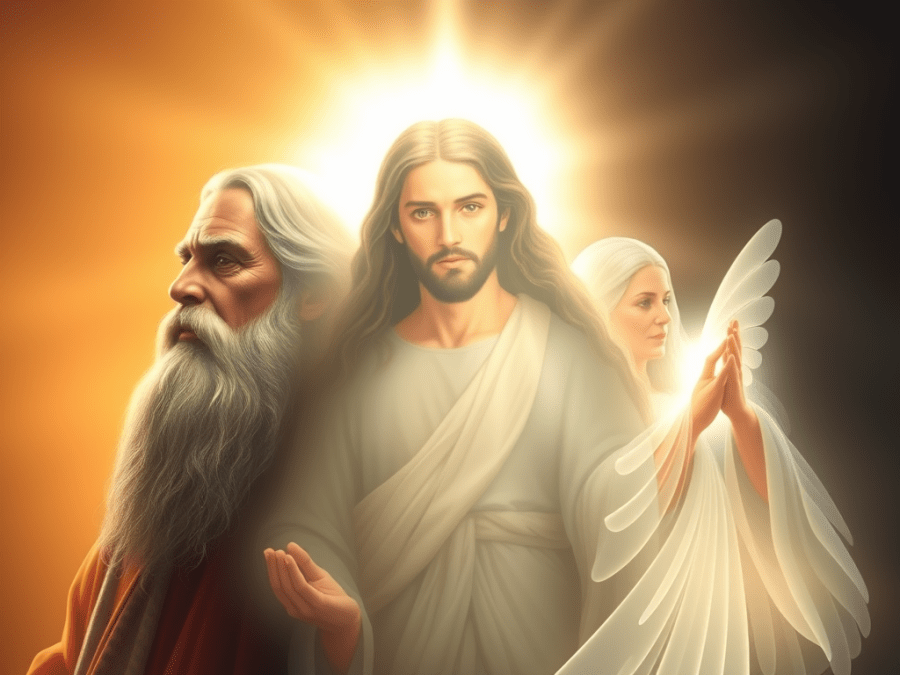
From an Evangelical Christian point of view, the Trinity is a core and foundational doctrine that defines the nature of God. While the word “Trinity” itself doesn’t appear in the Bible, Christians believe the concept is clearly taught throughout Scripture.
Here are the key tenets of the Trinity from an Evangelical perspective:
One God: Christians firmly uphold monotheism, believing there is only one true God. This is a central affirmation rooted in Old Testament passages like Deuteronomy 6:4 (“Hear, O Israel: The LORD our God, the LORD is one”). The Trinity does not mean there are three gods.
Three Distinct Persons: This one God eternally exists as three distinct persons: God the Father, God the Son (Jesus Christ), and God the Holy Spirit. These are not just different “modes” or manifestations of God (a heresy known as Modalism), but truly distinct persons with their own unique roles, yet sharing the same divine essence.
God the Father: Often understood as the source and sustainer of all things, the one who initiates salvation, and the ultimate authority.
God the Son (Jesus Christ): Is fully God and fully human. He is the Word of God incarnate, through whom all things were created, and the one who came to earth to redeem humanity through his life, death, and resurrection.
God the Holy Spirit: The active presence of God in the world and in believers. The Spirit convicts of sin, indwells believers, empowers them for service, guides them into truth, and brings about spiritual transformation.
Co-equal and Co-eternal: Each of the three persons of the Trinity is fully God, sharing equally in all divine attributes such as omnipotence, omniscience, omnipresence, holiness, love, and justice. There is no hierarchy of deity, meaning none is greater or lesser than the others in terms of their divine nature. They have always existed together as God.
One Essence/Substance: While distinct in person, they are one in essence, substance, or being. This means they are not three separate “gods” but one “God” who exists in a three-fold interpersonal relationship. Analogies like water (ice, liquid, vapor) or an egg (shell, white, yolk) are sometimes used to illustrate this, though Evangelicals acknowledge that no analogy can perfectly capture the infinite mystery of God.
Biblical Basis: Christians emphasise that the doctrine of the Trinity is derived from the consistent witness of Scripture. They point to:
Old Testament hints of plurality within God (e.g., “Let us make mankind in our image” – Genesis 1:26).
New Testament passages where all three persons are present and active (e.g., Jesus’ baptism where the Father speaks, the Son is baptized, and the Spirit descends like a dove; the Great Commission to baptise in the name of the Father, Son, and Holy Spirit – Matthew 28:19).
Passages that affirm the deity of Jesus Christ (e.g., John 1:1, Colossians 1:15-17) and the deity of the Holy Spirit (e.g., Acts 5:3-4).
Relational and Active: The Trinity is not seen as merely an abstract theological concept, but a dynamic and relational reality that impacts Christian life and understanding of salvation. The Father sends the Son, the Father and Son send the Holy Spirit, and through the Son and Spirit, believers have access to the Father. This relational aspect within God is also seen as the basis for human relationships and community.
In essence, for Christians, the Trinity is a profound mystery that reveals the complex yet unified nature of the God they worship and serve. It is considered essential for a full understanding of who God is, how He relates to His creation, and how salvation is accomplished.
Discover more from Joseph R. Mason
Subscribe to get the latest posts sent to your email.
