
What sacrifices have you made in life?
Psalm 51:16-17 NIV
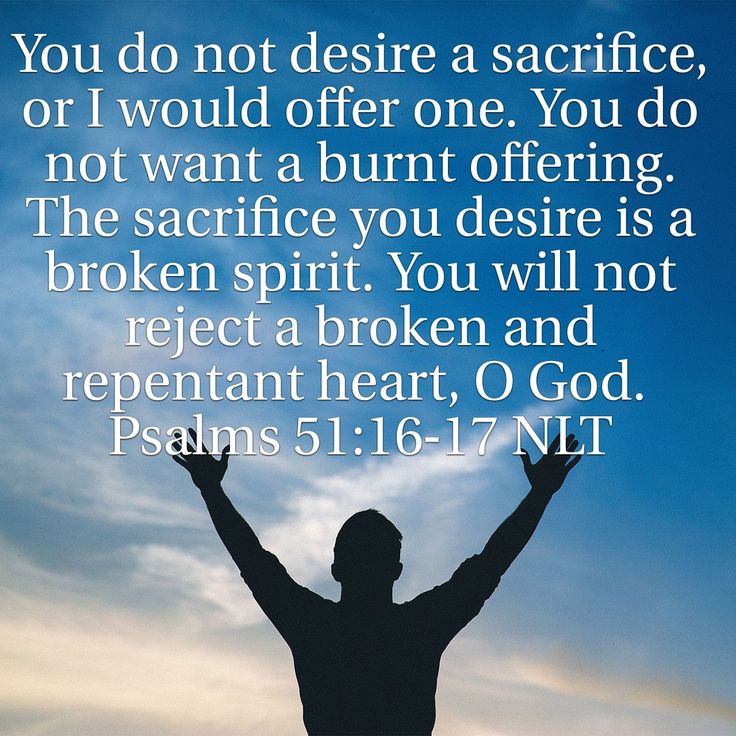
You do not delight in sacrifice, or I would bring it; you do not take pleasure in burnt offerings.
[17] My sacrifice, O God, is a broken spirit; a broken and contrite heart you, God, will not despise.
Psalm 51 is a deeply personal prayer of repentance attributed to King David after the prophet Nathan confronted him about his adultery with Bathsheba and the murder of her husband, Uriah (as recorded in 2 Samuel 11-12).
In this context, verses 16 and 17 express David’s profound understanding of what God truly desires in the face of such grave sin.
Let’s break them down:
Psalm 51:16: “You do not delight in sacrifice, or I would bring it; you do not take pleasure in burnt offerings.”
“You do not delight in sacrifice, or I would bring it”: David acknowledges that the traditional sacrifices prescribed by the Law of Moses, while important in their proper context, are insufficient to atone for the magnitude of his sin. As king, he had the means to offer numerous and costly sacrifices. However, he understands that these outward acts of religious devotion hold no real value to God if the heart behind them is not right. He would willingly offer them if he believed they could truly reconcile him with God.
“you do not take pleasure in burnt offerings”:
Burnt offerings were a specific type of sacrifice where an animal was entirely consumed by fire as an act of dedication and atonement. David recognises that God’s pleasure is not found in the mere ritual of these offerings, especially when offered without genuine repentance.
Psalm 51:17: “The sacrifices of God are a broken spirit; a broken and contrite heart, O God, you will not despise.”
“The sacrifices of God are a broken spirit”:
Here, David reveals what God truly desires: an internal transformation rather than external rituals alone. A “broken spirit” signifies a deep sense of sorrow, humility, and remorse for one’s sin. It’s the recognition of the gravity of the offense against a holy God.
“a broken and contrite heart”:
This phrase reinforces the idea of inward repentance. A “contrite heart” is one that is crushed, humbled, and deeply repentant. It’s a heart that grieves over sin and is genuinely committed to turning away from it.
“O God, you will not despise”:
This is the powerful promise and the core of David’s hope. Despite the enormity of his sin, he believes that God will not reject a truly broken and contrite heart. This highlights God’s mercy and grace, emphasizing that genuine repentance is the key to restoration.
In essence, these verses convey the following key ideas:
God values inward transformation over outward rituals: While sacrifices and offerings had their place in the Old Testament, they were never meant to be a substitute for genuine repentance and a changed heart.
True repentance involves a broken spirit and a contrite heart:
This signifies deep sorrow for sin, humility before God, and a sincere desire to turn away from wrongdoing.
God’s mercy extends to those who genuinely repent:
Despite the severity of sin, God promises not to despise a heart that is truly broken and contrite.These verses remain a powerful reminder that true worship and reconciliation with God stem from the condition of our hearts. They emphasize the importance of humility, repentance, and a genuine desire for God’s forgiveness above mere religious practices.
Please subscribe. Let’s support each other. I always follow back genuine writers, poets, and artists.
© Richard J Kirk, writing as Joseph R Mason – 2025. If you want to know why, see: https://josephmasonauthor.com/about/
If you like what you read, treat me to a coffee: https://www.buymeacoffee.com/josephiu Thank you.
Discover more from Joseph R. Mason
Subscribe to get the latest posts sent to your email.
